Invited Talks, Keynotes, Lectures & Seminars
Disclaimer: The slides featured on this page — presented in keynotes, invited talks, and invited courses — are intended solely for educational use and community-based information sharing. Use of these materials is at the user's own risk. The authors and their affiliated institutions disclaim all liability for any damages arising from their use.
Invited Keynotes and Talks
-
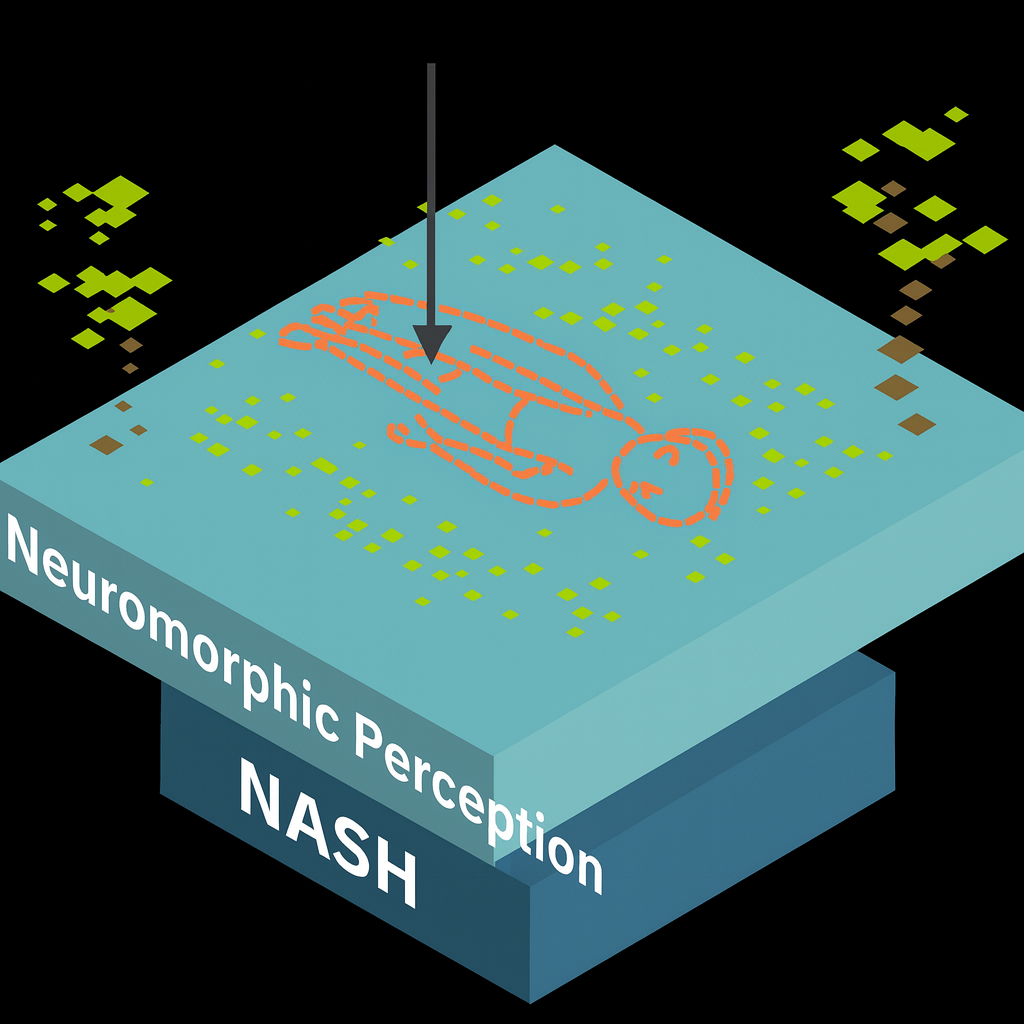
"Event‑Driven Intelligence for Adaptive Distributed Autonomous Systems"Presented the foundations and applications of event‑driven neuromorphic intelligence for distributed autonomous systems, highlighting embodied intelligence, adaptive control, and future directions for collaborative research.PDF
-
"Neuromorphic AI for Embodied Systems: Event‑Driven Intelligence for Prosthetics and Humanoids"Discussed neuromorphic AI as the computational foundation for embodied systems, with applications to prosthetics, humanoids, and event‑driven autonomous control.PDF
-
"Distributed Autonomy Meets Neuromorphic Intelligence"Presented a unified vision for large‑scale distributed autonomy powered by neuromorphic intelligence, highlighting scalable architectures for next‑generation autonomous systems.PDF
-
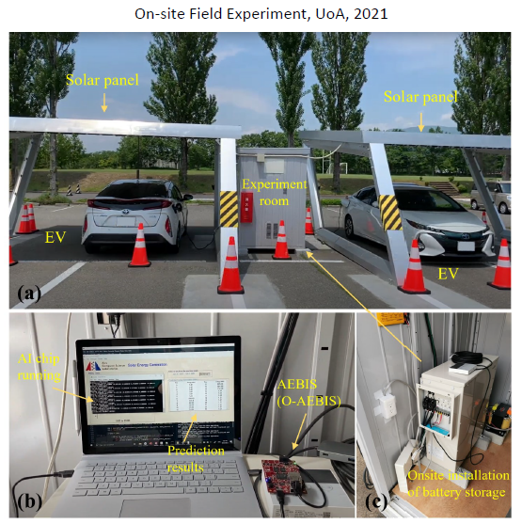
"Toward Sustainable Power: Intelligent Energy Harvesting with ICT and Electric Vehicles"Discussed integrated ICT–EV energy harvesting strategies and AI‑driven optimization for regional renewable energy ecosystems.PDF
-
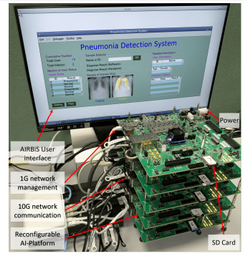
"Development of Application-Specific AI Chips: Creating Regionally Needed AI at the University – Neuromorphic AI Chips"Outlined the design of domain‑specific neuromorphic processors tailored to local industry needs and smart‑region applications.PDF
-
"Brain-Inspired Systems for AI in the Edge"Introduced low‑power neuromorphic architectures enabling real‑time intelligence in resource‑constrained edge environments.
-
"UoA Energy-Related Research"Presented the University of Aizu's multidisciplinary initiatives in smart energy systems, EV integration, and sustainable ICT.PDF
-
"Neuromorphic Computing"Delivered an overview of neuromorphic principles, event‑driven architectures, and emerging applications in intelligent systems.PDF
-
"Energy Management System with AI-Chip and EVs"Explored AI‑chip‑enabled energy management frameworks leveraging EVs as mobile storage and grid‑support assets.
-
"The Future of Machine Learning"Discussed trends in ML efficiency, hardware acceleration, and the shift toward neuromorphic and edge‑centric intelligence.PDF
-
"Neuromorphic Chips for AI at the Edge"Highlighted ultra‑low‑power neuromorphic chip designs enabling always‑on sensing and real‑time edge analytics.
-
"AI Chips for Intelligent Systems"Presented architectural innovations for AI accelerators supporting autonomous systems and embedded intelligence.PDF
-
"AI Chips: From Data Centers to Edge"Reviewed the evolution of AI hardware from large‑scale cloud accelerators to compact edge‑oriented neuromorphic devices.PDF
-
"Neuro-Inspired Computing Systems"Introduced biologically inspired computation models and their implications for future intelligent machines.
-
"Mindset for Innovation & Entrepreneurship"Shared insights on innovation culture, entrepreneurial thinking, and lessons from Silicon Valley ecosystems.PDF
-
"Neuro-Inspired Adaptive Manycore SoCs"Presented adaptive manycore architectures integrating neuromorphic principles for scalable intelligent processing.PDF
-
"Adaptive SoCs for Smart Autonomous Systems"Explored self‑optimizing SoC platforms enabling robust autonomous behavior in dynamic environments.PDF
-
"Si-Photonics for Optical Communication"Discussed silicon‑photonics technologies for high‑bandwidth, energy‑efficient on‑chip and inter‑chip communication.PDF
-
"Heterogeneous Systems for Future Computing"Reviewed heterogeneous computing paradigms combining CPUs, GPUs, and specialized accelerators for emerging workloads.
-
"On-Chip Optical Interconnects"Presented advances in optical interconnect technologies addressing bandwidth and energy bottlenecks in manycore systems.
-
"Smart Systems for Wireless Body Area Networks"Introduced intelligent WBAN architectures for health monitoring, emphasizing low‑power sensing and secure communication.
Invited Lecturer
Grid Technology with ICT and EV —
Tokyo University of Foreign Studies (TUFS),
Tokyo, Japan · 2024, 2025, 2026 (planned)
Delivered a series of invited lectures on smart-grid technologies integrating ICT, renewable energy, and electric vehicles. These lectures supported TUFS's interdisciplinary initiatives by introducing engineering-oriented perspectives to students in global studies and international cooperation programs, highlighting the role of intelligent energy systems in sustainable societal development.
PDF
Hardware-Oriented Neurocomputing —
Kyoto Institute of Technology (KIT),
Kyoto, Japan · 2022, 2023, 2024, 2025
Delivered advanced lectures on neuromorphic engineering, hardware-centric neural computation, and emerging architectures for intelligent systems. This engagement contributes to KIT's mission of fostering innovation in electronics and computational design, while strengthening collaborative research in brain-inspired computing and next-generation semiconductor technologies.
PDF
Network-on-Chip (Graduate) —
Hong Kong University of Science and Technology (HKUST),
Hong Kong · 2010–2013 · Annual two-week intensive
Delivered advanced graduate-level lectures on Network-on-Chip architectures, scalable interconnect strategies, and SoC communication methodologies. This engagement supported HKUST's semiconductor and VLSI research ecosystem, contributing to the development of skilled engineers and strengthening regional expertise in multicore and system-level design.
PDF
Invited Courses
Parallel/Distributed Computing (Graduate) —
Huazhong University of Science and Technology (HUST),
Wuhan, China · 2012–2016 · Annual three-week intensive
Delivered graduate-level courses in Parallel and Distributed Computer Systems. Each year approximately 80 graduate students enrolled, totaling around 400 students over the five-year period. Through rigorous instruction and hands-on modules, the course contributed to developing Asia's next-generation semiconductor talent by fostering expertise in multicore systems, interconnect technologies, and performance-aware computing.
Advanced Computer Organization (Graduate) —
African University of Science and Technology (AUST),
Abuja, Nigeria · 2008–2015 · Annual three-week intensive
Delivered foundational and advanced graduate-level courses in Computer Systems and VLSI Design. Between 16 and 20 graduate students participated each year, totaling approximately 100 students across five visits. The course equipped learners from across the African continent with theoretical grounding and practical skills essential for modern semiconductor and embedded system design, significantly strengthening regional research capacity.